As one of the musicians in This Is Spinal Tap sagely observes: "There's a fine line between clever and stupid." We don't always notice one way or another - plenty of good scary movies fall down on the plot, dialogue, or character fronts, but if what's happening onscreen keeps us invested, that's probably more important, and we don't always notice how smart a given movie is until it does something unexpected or otherwise subverts the expectations we have for the genre. But when a clever movie starts getting stupid, that can be a problem. Give me something that raises my expectations and I'm happy, but I've seen more than a few movies that lose the courage of their convictions and go for something easier and more cliched in an effort to meet someone's expectations of what a scary movie "should" be. Generally, they suffer as a result.
Prowl is not a complicated movie, but it is a generally good one. Unfortunately, it spends a good chunk of its running time walking a very fine line between being confident and smart about its material and falling into the sort of cliches that come part and parcel with the genre, and that wavering is ultimately a distraction.
Amber is a small-town girl with big-city dreams. Not so much to become a big star or anything, she just wants to get out of her little town. She's sick of looking after her alcoholic mother, misses her father, and has dreams where she runs and runs and runs away from something that keeps trying to bring her to ground. A small get-together at her friends' house sketches out the limits of her world - her friend Suzy, Suzy's complicated-relationship boyfriend Peter, spacy rich-kid Ray and his girlfriend Fiona, and nerdy, yearning Eric. They like where they are, interpersonal drama and all, but Amber doesn't. She's got a line on an apartment in Chicago, but the person offering to rent it to her has gotten a better offer, and unless she can drop off a deposit in the next day, he's going to rent it out to the other prospective tenant instead. Desperate, Amber turns to her friends to help get her to Chicago in time (which turns out to be a much more complicated affair than you'd think, but not in a way that feels implausible), and after much negotiating and eating of crow (nothing like having to hit up your nerdy friend for the use of his car the day after firmly rejecting his advances), the whole gang is on a road trip…until their van breaks down maybe 20 miles outside of their hometown. Well, shit.
Luckily, a trucker headed into the city takes pity on them and lets them pile into the back of his trailer, asking that they just not mess with the cargo he has in the back. They're smart about the offer - they take pictures of themselves with the trucker to let their friends know where they are, and one of them rides up front with the trucker to keep him honest (of course, nerdy Eric draws the short straw on that one). And they're off, making the best of the back of the trailer with booze and weed and music and Truth or Dare. Everything goes swimmingly until the truck takes a bad bounce and a swerve. Attempts to get Eric to answer his phone up front get only the trucker, who claims Eric is asleep, and he's awfully reluctant to wake him up. Then - peering out of holes in the side of the trailer - they notice they aren't anywhere near Chicago. Then one of them wonders why the trailer has holes in the side in the first place. Inevitably, someone messes with the cargo - it turns out this guy is carrying bags of blood, and it's not a refrigerated truck.
And then the truck stops, and the trailer door opens on a huge, abandoned factory space. Figures scuttle through the rafters and down the walls.
The premise of Prowl isn't that complicated - there are hunters, and there are the hunted. For the most part, the movie does a very good job with a very basic setup - it's a stripped-down, kinetic movie with little to no superfluous material (the same director made the far superior Rovdyr, which has all of this movie's strengths and few of its weaknesses). Everything that happens has a point and a purpose, even the smallest, most inconsequential asides at the beginning of the film. Once the action starts, everything moves quickly and decisively, and although there isn't necessarily a lot to outright scare you, there's a good overall atmosphere of tension and fear for the most part. As teen-meat setups go, it's a reasonably intelligent take - the party scene is a deft, economic sequence, communicating a lot about who these people are without necessarily spelling everything out, and that's one of the movie's strengths - the ability to convey a lot of information, trusting in the ability of the audience to make sense of what's going on without belaboring the obvious. The protagonists are actually pretty competent throughout - they make very few dumb decisions, and actually take action against the creatures hunting them, instead of completely breaking down. We're mostly kept in the dark about who/what the antagonists are, which is for the better, because when the lead antagonist starts talking, you get the feeling if they'd let the dialogue go on on any longer, it would go right headfirst into stupid cliche.
And that's where this movie gets into trouble - it is constantly veering back and forth between being on the right side of the line and being as stagey as any other I Know What You Screamed Last Summer When You Took A Wrong Turn on Friday the 13th sort of movie. When Amber tells the trucker (apparently in all seriousness) that she has to get to Chicago because it's her destiny, your eyes roll completely up into the back of your head, even though it ends up paying off in the end. Amber's friends spout teen-movie homilies one second and talk like normal human beings the next. It's pretty apparent what's hunting them, and it feels like the movie wants to give us some sort of explanation, some sort of mythology, but stops short. It's better that way, because there's no reason to think that the explanation we get would be anything special, and so you wait to cringe at how cheesy it's going to be, but it never comes. But still, based on the wildly uneven tone of the movie overall, it could come at any second, so the cringe just sort of sits there, just under the surface of your face, waiting to happen.
Our sense of place and time is sort of a problem, too - you get the idea that the meat of the action is supposed to be taking place at night, but there are flashes of daylight as the protagonists move from one place to another, and since they're running from abandoned warehouse to…another abandoned warehouse?…it gets easy to feel like this is less about people trying to escape a bad situation and more like they're doing laps around a very large set. To its credit, though, its final act has a nice little reversal that feels just unexpected enough to be a pleasant surprise, but is still rooted very solidly in everything that came before (even redeeming some of the sillier and less understandable moments from earlier in the film), and the ending feels refreshingly ragged and free of closure in a good way. It avoids cliche as often as it flirts with it, but in doing so, you get the feeling that you're watching a good movie that has a mediocre one trapped inside it, struggling to get out.
IMDB entry
Purchase from Amazon
Available from Amazon Instant Video
Unavailable from Netflix
Saturday, September 14, 2013
Sunday, September 8, 2013
V/H/S/2: 2 Clever By 1/2
The first V/H/S was pretty good - five short films shot using the found-footage conceit, and mostly being pretty good despite the danger of that particular approach being run into the ground. It was at its best when it fully embraced the found-footage aesthetic, and at its weakest when it called attention to the conceit by deviating from it. When found-footage films are at their best, it's because there's a rawness and an immediacy to the footage that makes it easier to believe that you aren't just watching a movie - that this actually happened, and you're witness to some awful document.
This makes it all the more puzzling as to why V/H/S/2 wastes so much of its energy and potential on an examination of the conceit for its own sake, at the expense of actually telling scary stories.
The framing story - titled Tape 49 - is, maybe tellingly, more self-aware than the framing narrative was in the first film. A pair of private investigators are hired by a woman to track down her son when he sort of drops out of sight. The two of them break into his house, and find not a whole lot of anything except piles of videotapes, TVs, notebooks, and his laptop, which has some sort of video diary on it. One of them starts poking around the house trying to look for him, the other starts looking at the diary and the tapes.
It's paced better than the framing narrative was in the first film and is much more coherent, so it ends up being much creepier and an actual addition to the story. However, part of it also involves the missing son essentially explaining where the tapes come from to a certain extent and hinting at a network of collectors. This smells like the beginning of a mythology, and this is exactly the sort of shit that gets sequels into trouble. The point isn't where these tapes are coming from any more than the point of Hostel was to explain how the murder-holiday business was run. It's that they exist, and the protagonists are now caught up in it, and what happens now? To the extent that attention is being paid to the existence of the tapes, it takes away from our ability to accept their existence and immerse ourselves in the stories they tell.
Phase I Clinical Trials
The first entry is a tidy little ghost story about a man who volunteers to test out a new prosthetic eye, on the condition that the visual information the eye receives be recorded for the manufacturers to use as test data. As you might expect, this new eye is capable of seeing all sorts of stuff we shouldn't be able to see, and things get very weird, very fast. To the extent that it works, it's effectively scary- when the camera is your eye, you can't really look away and everything has to happen on-camera, and the ghosts don't need to do too much to elicit fright. A lot happens that isn't explained outright, and although not having a complete picture of what's going on is good (and thinking about it a little afterwards fits a lot of pieces into place, giving this one a little staying power), how it gets there feels so artificial and unnecessary at points that there could have been a better way to handle it. This is largely down to some very wooden acting and dialogue. This segment is one of the most naturalistic, and so the staginess of the characters is really disruptive to the feel it's trying to create. Also, in what's going to be an unfortunate theme throughout, it's a little too low-rent for its premise. The clinic where the prosthetic eye is implanted looks less like the sort of hospital you'd expect would be capable of implanting an artificial eye, and more like my vet's office. Again, it calls attention to itself and takes you, even for a second or two, out of the story.
A Ride In The Park
This is sort of the "funny one" of this entry, but it feels a little slight. A man is going out for a bike ride, and turns on the little GoPro video camera he has mounted on his helmet to record some footage of the ride. Why he's doing this isn't really clear, and the artificiality of the camera's conceit make it feel a little shoehorned in. His ride goes along nicely until he runs into some people who are sort of oddly shambling down the trail, almost as if…okay fine, they're zombies, and now he's stuck in the middle of an outbreak of the walking dead, caught live on helmet-cam. The segment has a good mixture of gore and slapstick moments, reminding me of some of the animated shorts shown at Spike & Mike's Sick & Twisted festivals or the movie Braindead/Dead Alive, and although I'm pretty sick of zombie movies (especially jokey ones), a surprisingly touching ending redeems this one to a degree. On the other hand, it meanders a little, which although appropriate for a movie about the walking dead, feels like the conceit was supposed to carry it more than it actually did. And again, some of the dialogue was really, really shitty. Part of the strength of found-footage is verisimilitude, but if the actors can't pull it off, it comes off even more stagey and artificial than a conventional film approach.
Safe Haven
This segment is the most fully-realized, and probably the most horrifying, but is also the one that is least classically found-footage. The story of a film crew making a documentary about a controversial People's Temple-type cult, it features a mixture of cameras, both sourced on the protagonists (everything from conventional video cameras to button-sized spy cams) and from surveillance footage. Because there are so many points of view, it loses some of what makes found-footage movies most effective, because our point of view isn't limited or constrained - we have as much access to everything that's going on as we would in a conventionally shot film, and we lose some of the you-were-there feeling that you get when you only see what the one camera happens to see at a given moment. It becomes especially distracting when you realize the whole reason a particular camera is placed where it is (it doesn't really make much sense in the context of the film) is probably to capture specific scenes at the end, and it feels like a cheat, like the filmmakers were less concerned with making a found-footage film than making a scary film and finding a way to fit a found-footage aesthetic on top of it.
It's too bad, because it's probably the closest to capturing the out-of-control, utterly-batshit terrifying-things-are-happening-and-holy-fuck-what-do-we-do-about-it feeling that marked the first V/H/S at its best. When the film crew realizes what the cult plans to do, it's too late, and it's oh so much worse than anyone could reasonably expect. Unfortunately, the filmmakers didn't know when to stop, and in the final shot, a poorly-done effect undoes a lot of the goodwill engendered by the rest of the segment.
Slumber Party Alien Abduction
This one struck me as ugly and sort of pointless. We open on a bunch of obnoxious suburban kids harassing each other, and it's the best, most naturalistic acting in the entire collection - this is exactly how annoying preteen kids act. Mom and Dad are going away for the weekend, and older siblings are doing the babysitting. Needless to say, these teenagers have their own fun in mind, and the preteen kids do their utmost to sabotage their older siblings at every turn. As promised in the title (which bugs me - it feels so lazy, like the filmmakers didn't care enough to keep anything a surprise), aliens show up, and everything goes nuts. Not in an especially interesting way - kids are being shitty, then there are aliens. There's also a disconnect between what we're seeing through our single-camera perspective and what the protagonists seem to see. From our perspective, there's all kinds of bizarre shit going on - bright lights and loud noises out of nowhere - but none of the protagonists seem to care. It feels like someone forgot to tell them they were supposed to be surprised by these things.
When the shit hits the fan, the footage is almost too realistic - it's too fragmented to get a sense of space, direction, or sequence, just a lot of running and screaming with the camera pointed at absolutely nothing. It's disorienting and abrasive - lots of bright lights, bright colors, and oppressively loud noises on top of the shrieking of the protagonists, and in the utter absence of reference points, the audience is confused instead of scared because just trying to figure out what we're supposed to be watching is exhausting. There are a lot of people to keep track of, and the point of view is hard to follow, and again, the most important effects don't work, which just makes the whole thing feel like some cheap, stupid home horror movie much like some of the kids are making at the beginning of the segment. If that had somehow played into the events, like this was some kind of joke that got out of control, it could have made for an effective subversion of the found-footage conceit, and could have built to some good tension. Instead, it feels like a deliberately shitty found-footage movie, like a perverse joke on the audience that ends on a gratuitously nasty note. The whole thing feels juvenile and sort of contemptuous of the audience, and it doesn't earn any of it.
In sum, V/H/S/2 is disappointing, and I think it's because it spends more time thinking about the conceit and trying to subvert it than actually doing something within its constraints. Most of the cameras are placed in implausible ways (a prosthetic eye, mounted to a bike helmet, strapped to a dog), and when they aren't, there are so many that it might as well be a conventionally shot movie. Very few of the segments really achieve a sustained sense of naturalism, and the one that does is almost willfully over-naturalistic to the point of incoherence. Instead of relying on realistic threats, most of the segments stretch for something supernatural and fail to convey it convincingly. In other words, these are found-footage movies that feel like they're trying to run away from being found-footage movies as fast as they can, and although that potentially makes for some really interesting critical readings, it doesn't make for good scary movies.
Unvailable from Amazon Instant Video
Unvailable from Netflix
Sunday, September 1, 2013
The Lords Of Salem: At What Exactly Am I Looking?
One of my favorite things about scary movies is the sheer audacity of the imagery you get sometimes. Trying to scare people means unsettling them, shocking them, provoking them, and horror filmmakers with real vision at their best dredge things up from nightmares and elevate them to art. I suspect that any number of people who turn up their nose at horror films would probably not do so at the works of Bosch or Goya or Bacon. Michael Myers standing in the shadows, the only thing visible his impassive white face. Freddy Krueger's tongue protruding from the receiver of a telephone. Leatherface swinging his chainsaw around wildly against the setting sun. Two men glimpsed behind a door in the Overlook Hotel - one in a tuxedo, the other in a bear costume, blank and awful. Rosemary's gauzy, half-remembered reverie with the Devil. The stitched-together obscenity of the Human Centipede contrasted against the clean, stylish modernity of its home. Martyrs' commingling of flesh and steel, violence and serenity. At its best, horror film is by turns confrontational, surreal, and even moving. How is that not art?
Rob Zombie's first film - House of 1000 Corpses - struck me as a bit of a mess. There was a gritty slasher film in the manner of The Texas Chainsaw Massacre in there somewhere, amid more impressionistic interludes unrelated to the overall narrative, and the whole thing ended in a lurid, highly stylized manner more appropriate to something like Hellraiser or A Nightmare on Elm Street. There was a lot of vivid imagery, but it felt disconnected - less a movie than a series of set pieces in different styles. Stylistically, it felt to me less like a movie and more like a sketchbook.
However, he followed it up with The Devil's Rejects and Halloween, both of which were much more focused and reconciled the disparate styles of his first movie well into an identifiable aesthetic. I know a whole lot of people who'd argue with me on the artistic merit of Rob Zombie's movies, but snobbery be damned: Those two movies are art. There's a point of view rooted in rich cinematic tradition and an arresting attention to visuals. There's an awareness and active subversion of popular culture without didacticism. There's a conversation between the original material upon which the films draw and what he does with it. I think of the rude scribbles and splashes of color contrasted against blank cinderblock walls in his remake of Halloween, and the dusty, garishly lit carnival/ghost town/bordello run by Charlie Altamont in The Devil's Rejects, and I marvel that anyone can dismiss any of this as thoughtless.
So what I'm trying to say is that Rob Zombie is one of those directors I think of when I'm thinking of audacious, provocative imagery in horror films, and initial impressions of The Lords of Salem suggested that it was going to fall much more on the impressionistic side of things than his previous films, with touchstones like Rosemary's Baby and Ken Russell getting thrown around a lot. Anticipation being what it is, maybe there's no way this film could have lived up to my expectations, but The Lords of Salem, at least in the form it was finally released, is more than a bit of a mess.
We open on witches - grubby, mostly-naked women engaged in foul rituals - and their capture and defeat at the hands of the devout during the time of the Salem Witch Trials. The queen of these witches curses the women of Salem and the descendants of their executioners. And now, just as suddenly, it is the modern day, where we follow Heidi, a DJ on a popular radio show in Salem. As her shift comes to an end, she picks up a package left for her at the station - a wooden box, containing a record by a group calling itself The Lords of Salem. She takes it home to give it a listen, like you do. The music on the record is atonal, almost poisonous, and Heidi is taken by a strange malaise upon hearing it. Nevertheless, she decides to give it a spin on the show the next night. It's not the first strange thing to happen to Heidi this week, either. Somebody's moved into the vacant apartment down the hall from her, even though her landlady swears the apartment is still vacant.
When Heidi plays the mysterious record on her show the next night, it seems almost to call to the women of Salem, to awaken something in them. It freaks out her fellow DJs, and Heidi starts having nightmares. The door to the apartment down the hall is open again. The landlady's sisters have come to visit her from England, and they invite Heidi in for a spot of tea. Something is awake in Salem.
Now, if there was one person I'd want to make a movie about a cursed record summoning the spirits of long-dead witches, it'd be Rob Zombie. His style is tailor-made for that sort of subject matter, and seeing what he could do with something driven more by imagery and less by action was an exciting prospect. Unfortunately, what we get is incoherent and unfocused, and loses a lot of the impact it could have had as a result. There's nothing wrong with impressionistic moviemaking per se - going for a mood or feeling over coherent narrative or character depth can be really effective, especially in horror, where mood and feeling can count for so much. Sometimes just presenting imagery that bypasses the conscious and hits us right where our nightmares live makes for the scariest of scary movies.
However, if you're going to do that, pacing is critical. You have to establish a rhythm that starts slow but ratchets everything up at a steady pace - it has to go from normal to "wait a second" to "what was that?" to "what the FUCK?" to "OH GOD" with a sure and steady hand, so that by the end of it, we're immersed in the insanity, and The Lords of Salem is all over the place. Nothing happens, then weird things happen, then less-weird things happen, then nothing happens, then nothing happens, then really weird things happen, and the story bounces back and forth between a couple sets of characters, without their storylines really complementing each other. Tension and suspense and atmosphere get burned off with every cutaway, so what should feel like escalation feels more like a series of set pieces cut up by interstitial cards telling us what day it is (a nice nod to The Shining). If it's supposed to communicate the progression of events, it doesn't really succeed, because sometimes days pass with really weird shit happening, sometimes they don't. We bounce back and forth not just in space between different characters, but also in time, going back to the original witches more than once, but these segments don't clearly communicate anything but what we already knew - there were witches, and they died with their purpose unfulfilled. It's distracting, and leaves us looking for more of a story than there actually is.
As it is (and this is important because this film apparently had a troubled production history that meant the movie Zombie wanted to make wasn't anything near what we actually got), it's probably this ambivalence about whether to tell a story or bombard us with images that is most damaging to the film. The main story is basic, minimal, even - DJ plays evil record, begins process of personal disintegration that leads the devil's forces into our world - and that's absolutely okay if you want the nightmarish imagery that comes with that to do the heavy lifting. But it doesn't really become a truly imagery-rich film until past the halfway mark, at which point the whole thing feels lopsided instead.
It doesn't help that more than once, we're presented with imagery in the form of nightmare sequences - which works okay once or twice, but starts to feel formulaic after awhile - and that some of Zombie's choices for imagery are so bizarre that they stop being scary because the viewer's first impulse is to try and figure out what they're looking at, rather than having just enough to grab onto to make its deviations really disturbing.
I don't doubt Rob Zombie's vision - he's already demonstrated that he's capable of making excellent movies with a specific point of view - and I am not for a second going to ding a filmmaker for trying to stretch his wings and do something ambitious. And when The Lords of Salem works, it works very well. The song that begins the whole process falls at an intersection of primitive, dissonant, and mournful that makes it a haunting in and of itself - listening to it at points in the movie made it feel like it was sinking into my bones and wouldn't go away for a few days. There are isolated images and set pieces - one especially striking one at the end, set to the song "All Tomorrow's Parties" - that stuck with me long after the movie as well. The problem is that these are just pieces, elements, isolated moments. They don't tell a story that, however slight, would give them the contextual scaffolding they need to have maximum impact. But developing ideas to their fullest require time, focus, attention, and support, which it sounds like were in short supply for this film. So as it stands, it's an ambitious failure, and the sort of thing likely to become legend in the "but have you seen the director's cut?" sort of way. Maybe it's destined to become a film whose "real" or "true" version is the stuff of legend, rumored to have really disturbing effects on the people who see it. That'd be a pretty good movie for Zombie to do, now that I think about it.
IMDB entry
Purchase from Amazon
Available from Amazon Instant Video
Unvailable from Netflix
Rob Zombie's first film - House of 1000 Corpses - struck me as a bit of a mess. There was a gritty slasher film in the manner of The Texas Chainsaw Massacre in there somewhere, amid more impressionistic interludes unrelated to the overall narrative, and the whole thing ended in a lurid, highly stylized manner more appropriate to something like Hellraiser or A Nightmare on Elm Street. There was a lot of vivid imagery, but it felt disconnected - less a movie than a series of set pieces in different styles. Stylistically, it felt to me less like a movie and more like a sketchbook.
However, he followed it up with The Devil's Rejects and Halloween, both of which were much more focused and reconciled the disparate styles of his first movie well into an identifiable aesthetic. I know a whole lot of people who'd argue with me on the artistic merit of Rob Zombie's movies, but snobbery be damned: Those two movies are art. There's a point of view rooted in rich cinematic tradition and an arresting attention to visuals. There's an awareness and active subversion of popular culture without didacticism. There's a conversation between the original material upon which the films draw and what he does with it. I think of the rude scribbles and splashes of color contrasted against blank cinderblock walls in his remake of Halloween, and the dusty, garishly lit carnival/ghost town/bordello run by Charlie Altamont in The Devil's Rejects, and I marvel that anyone can dismiss any of this as thoughtless.
So what I'm trying to say is that Rob Zombie is one of those directors I think of when I'm thinking of audacious, provocative imagery in horror films, and initial impressions of The Lords of Salem suggested that it was going to fall much more on the impressionistic side of things than his previous films, with touchstones like Rosemary's Baby and Ken Russell getting thrown around a lot. Anticipation being what it is, maybe there's no way this film could have lived up to my expectations, but The Lords of Salem, at least in the form it was finally released, is more than a bit of a mess.
We open on witches - grubby, mostly-naked women engaged in foul rituals - and their capture and defeat at the hands of the devout during the time of the Salem Witch Trials. The queen of these witches curses the women of Salem and the descendants of their executioners. And now, just as suddenly, it is the modern day, where we follow Heidi, a DJ on a popular radio show in Salem. As her shift comes to an end, she picks up a package left for her at the station - a wooden box, containing a record by a group calling itself The Lords of Salem. She takes it home to give it a listen, like you do. The music on the record is atonal, almost poisonous, and Heidi is taken by a strange malaise upon hearing it. Nevertheless, she decides to give it a spin on the show the next night. It's not the first strange thing to happen to Heidi this week, either. Somebody's moved into the vacant apartment down the hall from her, even though her landlady swears the apartment is still vacant.
When Heidi plays the mysterious record on her show the next night, it seems almost to call to the women of Salem, to awaken something in them. It freaks out her fellow DJs, and Heidi starts having nightmares. The door to the apartment down the hall is open again. The landlady's sisters have come to visit her from England, and they invite Heidi in for a spot of tea. Something is awake in Salem.
Now, if there was one person I'd want to make a movie about a cursed record summoning the spirits of long-dead witches, it'd be Rob Zombie. His style is tailor-made for that sort of subject matter, and seeing what he could do with something driven more by imagery and less by action was an exciting prospect. Unfortunately, what we get is incoherent and unfocused, and loses a lot of the impact it could have had as a result. There's nothing wrong with impressionistic moviemaking per se - going for a mood or feeling over coherent narrative or character depth can be really effective, especially in horror, where mood and feeling can count for so much. Sometimes just presenting imagery that bypasses the conscious and hits us right where our nightmares live makes for the scariest of scary movies.
However, if you're going to do that, pacing is critical. You have to establish a rhythm that starts slow but ratchets everything up at a steady pace - it has to go from normal to "wait a second" to "what was that?" to "what the FUCK?" to "OH GOD" with a sure and steady hand, so that by the end of it, we're immersed in the insanity, and The Lords of Salem is all over the place. Nothing happens, then weird things happen, then less-weird things happen, then nothing happens, then nothing happens, then really weird things happen, and the story bounces back and forth between a couple sets of characters, without their storylines really complementing each other. Tension and suspense and atmosphere get burned off with every cutaway, so what should feel like escalation feels more like a series of set pieces cut up by interstitial cards telling us what day it is (a nice nod to The Shining). If it's supposed to communicate the progression of events, it doesn't really succeed, because sometimes days pass with really weird shit happening, sometimes they don't. We bounce back and forth not just in space between different characters, but also in time, going back to the original witches more than once, but these segments don't clearly communicate anything but what we already knew - there were witches, and they died with their purpose unfulfilled. It's distracting, and leaves us looking for more of a story than there actually is.
As it is (and this is important because this film apparently had a troubled production history that meant the movie Zombie wanted to make wasn't anything near what we actually got), it's probably this ambivalence about whether to tell a story or bombard us with images that is most damaging to the film. The main story is basic, minimal, even - DJ plays evil record, begins process of personal disintegration that leads the devil's forces into our world - and that's absolutely okay if you want the nightmarish imagery that comes with that to do the heavy lifting. But it doesn't really become a truly imagery-rich film until past the halfway mark, at which point the whole thing feels lopsided instead.
It doesn't help that more than once, we're presented with imagery in the form of nightmare sequences - which works okay once or twice, but starts to feel formulaic after awhile - and that some of Zombie's choices for imagery are so bizarre that they stop being scary because the viewer's first impulse is to try and figure out what they're looking at, rather than having just enough to grab onto to make its deviations really disturbing.
I don't doubt Rob Zombie's vision - he's already demonstrated that he's capable of making excellent movies with a specific point of view - and I am not for a second going to ding a filmmaker for trying to stretch his wings and do something ambitious. And when The Lords of Salem works, it works very well. The song that begins the whole process falls at an intersection of primitive, dissonant, and mournful that makes it a haunting in and of itself - listening to it at points in the movie made it feel like it was sinking into my bones and wouldn't go away for a few days. There are isolated images and set pieces - one especially striking one at the end, set to the song "All Tomorrow's Parties" - that stuck with me long after the movie as well. The problem is that these are just pieces, elements, isolated moments. They don't tell a story that, however slight, would give them the contextual scaffolding they need to have maximum impact. But developing ideas to their fullest require time, focus, attention, and support, which it sounds like were in short supply for this film. So as it stands, it's an ambitious failure, and the sort of thing likely to become legend in the "but have you seen the director's cut?" sort of way. Maybe it's destined to become a film whose "real" or "true" version is the stuff of legend, rumored to have really disturbing effects on the people who see it. That'd be a pretty good movie for Zombie to do, now that I think about it.
IMDB entry
Purchase from Amazon
Available from Amazon Instant Video
Unvailable from Netflix
Remake: We Aren't What We Were
It's been a little while since an acclaimed horror movie that wasn't made in the United States got an American remake, and now…just now…as I'm typing these words…I'm realizing maybe for the first time how much of an expression of cultural privilege the idea of a remake is, as if it's only the United States that can't seem to watch the same fucking movie the rest of the world did.
Which isn't to say that there isn't a market or appreciation for movies not made in the United States here in the U.S., there definitely is, but there's definitely this feeling at some level of the film industry that the movie doesn't "count" until it gets its American remake. Maybe that's a function of the everyday American moviegoer not "getting" it and expecting to have everything handed to them in cinematic language they understand. Maybe it's the idea that the American version will somehow always be "better", even when it really, really, isn't. I'm not sure it's not any more depressing that any other number of things about the film industry in the United States, and I probably should have twigged to this a long time ago, but there it is.
Believe it or not, that's not the main point of this post. That just sort of popped into my head as I started writing.
What I wanted to talk about was the upcoming remake of Somos Lo Que Hay, remade in the U.S. as We Are What We Are. I'm not someone who believes that the original is always good and the remake is always bad, though it does bum me out that movies don't always get the audience they deserve until they're remade (see above). Remakes vary in quality and in the degree to which they depart from the original. You've got cases where the remake shifts things just enough to take advantage of cultural differences in the audience ([REC] to Quarantine comes to mind), others where you get bigger changes that still preserve what made the original good, even when the narrative departs significantly (Ringu to The Ring), and instances where the remake manages to completely betray the heart of what made the original so good and make you wish movies never got remade (Spoorloos to The Vanishing). So there's a fair amount of freedom in what it means for something to be a remake.
We Are What We Are caught my attention because it looks like it's pretty much telling the same story, but inverting everything else about it.
The original is the story of the sudden death of a family's patriarch, and the attempts of his family to maintain their way of life in the wake of his death - it's a story of mounting desperation, as the rest of the family attempts to fill the role vacated by the father and secure the necessary materials for an undescribed ritual before the clock strikes midnight. The family lives in Mexico City, and the dead father leaves behind a wife, a daughter, and two sons who jockey to pick up where he left off to keep the family alive. The remake relocates the family from urban Mexico to a rural part of the United States, and it is the mother who dies, leaving behind a husband, a son, and two daughters.
These seem like very simple changes - just flip adjectives and there you go - but having watched the trailer, it really does change the entire feeling of the film. Setting it in the country frames it less in terms of poverty and running out of time and options, and more in terms of an attempt to maintain a way of life against encroaching civilization. I'm curious to see what reversing the genders of the family does, because a big part of the original dealt with the construction of masculinity, and I don't know if it'll be the same here. Finally, the original's less about what the family does and more about how the father's death fractures them and makes them question themselves and their place in the world. I'm curious to see how much of that is preserved in the remake, because the trailer makes it look (as it probably should) like a more traditional horror film, cutting back and forth between the family and the people in the community who begin to put some puzzle pieces together in the wake of the mother's death.
Honestly, I think that's for the better - one of my criticisms of the original was that although it had some interesting things to say about gender roles, it wasn't scary. It wasn't so much a horror movie as a drama with horror tropes slapped on top. The trailer for the remake puts much more focus on the idea that there is Something Wrong with this family, and there's lots of thunder and lightning and menace seething under the surface. I'll be interested to see if they're able to pull it off.
Which isn't to say that there isn't a market or appreciation for movies not made in the United States here in the U.S., there definitely is, but there's definitely this feeling at some level of the film industry that the movie doesn't "count" until it gets its American remake. Maybe that's a function of the everyday American moviegoer not "getting" it and expecting to have everything handed to them in cinematic language they understand. Maybe it's the idea that the American version will somehow always be "better", even when it really, really, isn't. I'm not sure it's not any more depressing that any other number of things about the film industry in the United States, and I probably should have twigged to this a long time ago, but there it is.
Believe it or not, that's not the main point of this post. That just sort of popped into my head as I started writing.
What I wanted to talk about was the upcoming remake of Somos Lo Que Hay, remade in the U.S. as We Are What We Are. I'm not someone who believes that the original is always good and the remake is always bad, though it does bum me out that movies don't always get the audience they deserve until they're remade (see above). Remakes vary in quality and in the degree to which they depart from the original. You've got cases where the remake shifts things just enough to take advantage of cultural differences in the audience ([REC] to Quarantine comes to mind), others where you get bigger changes that still preserve what made the original good, even when the narrative departs significantly (Ringu to The Ring), and instances where the remake manages to completely betray the heart of what made the original so good and make you wish movies never got remade (Spoorloos to The Vanishing). So there's a fair amount of freedom in what it means for something to be a remake.
We Are What We Are caught my attention because it looks like it's pretty much telling the same story, but inverting everything else about it.
The original is the story of the sudden death of a family's patriarch, and the attempts of his family to maintain their way of life in the wake of his death - it's a story of mounting desperation, as the rest of the family attempts to fill the role vacated by the father and secure the necessary materials for an undescribed ritual before the clock strikes midnight. The family lives in Mexico City, and the dead father leaves behind a wife, a daughter, and two sons who jockey to pick up where he left off to keep the family alive. The remake relocates the family from urban Mexico to a rural part of the United States, and it is the mother who dies, leaving behind a husband, a son, and two daughters.
These seem like very simple changes - just flip adjectives and there you go - but having watched the trailer, it really does change the entire feeling of the film. Setting it in the country frames it less in terms of poverty and running out of time and options, and more in terms of an attempt to maintain a way of life against encroaching civilization. I'm curious to see what reversing the genders of the family does, because a big part of the original dealt with the construction of masculinity, and I don't know if it'll be the same here. Finally, the original's less about what the family does and more about how the father's death fractures them and makes them question themselves and their place in the world. I'm curious to see how much of that is preserved in the remake, because the trailer makes it look (as it probably should) like a more traditional horror film, cutting back and forth between the family and the people in the community who begin to put some puzzle pieces together in the wake of the mother's death.
Honestly, I think that's for the better - one of my criticisms of the original was that although it had some interesting things to say about gender roles, it wasn't scary. It wasn't so much a horror movie as a drama with horror tropes slapped on top. The trailer for the remake puts much more focus on the idea that there is Something Wrong with this family, and there's lots of thunder and lightning and menace seething under the surface. I'll be interested to see if they're able to pull it off.
Friday, August 2, 2013
More Hiatus
Well, the life upheavals to which I referred a few posts ago haven't subsided as much as gotten significantly worse over the last month and a half. As it stands, I don't have the energy, mental resources, or emotional strength to have anything interesting to say about horror films right now, and probably won't until sometime in the fall. Again, I'm not abandoning the blog (I have notes for posts on V/H/S/2 and The Lords of Salem and some really good stuff on deck), but there are things going on in my life right now that are taking all of my time and energy, and just getting through the day is tough enough, let alone having what it takes to do this. I hope you'll stick with me, and until I start posting again (hopefully September or October at the latest), feel free to check out some of my older posts.
Friday, June 7, 2013
The Tall Man: Fractured Fairy Tales
I recognize that my definition of horror is much looser than most people's, and that's mostly a conscious decision on my part. I don't like the idea that the themes and imagery with which horror films play should be prescriptively confined to a genre, nor do I like the way that genre classification is used to marginalize and delegitimize films along class lines. Horror belongs to everyone and everything, as far as I'm concerned.
One example of how this can be problematic is the occasional dissonance between a film and how that film is presented. One recent example might be Cherry Tree Lane, which is a well-acted, nuanced, utterly unsparing chamber drama about class divides told through the story of a home invasion. It's quite good and I'd recommend checking it out. However, the advertising makes it look like some kind of slasher film, which it really, really isn't.
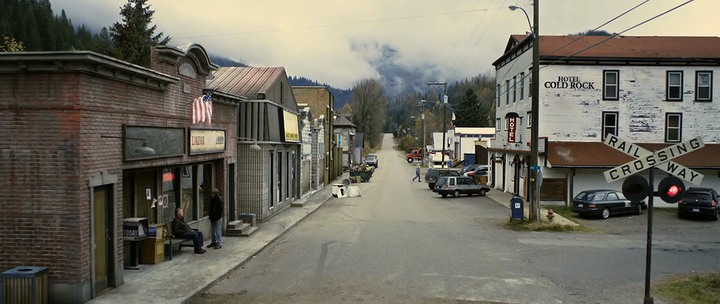
The Tall Man is another example - it's billed basically as a monster movie, but it really, really isn't. If anything, it's a fable or fairy tale. One could be forgiven going into The Tall Man for thinking it's going to be a monster movie - the premise suggests it, and it's directed by Pascal Laugier, who directed the excellent (and utterly monstrous) Martyrs. And fables and fairy tales sometimes have monsters in them, but they're not really the point. The point is what the monsters have to say about the world in which they exist.
Julia Denning is the closest thing the town of Cold Rock has to a doctor. Which is to say that she's a nurse, her deceased husband was the town doctor, and Cold Rock is a dying mining town with little to offer the people who remain. As the movie opens, she's delivering a child into the world - it's a problematic pregnancy, the child might not make it. The mother is in her teens, almost a child herself, and she's been brought to Julia because the nearest hospital is too far away, and the girl's own mother doesn't want to attract too much attention to the child. In addition to deep poverty and a rapidly dwindling population, the town of Cold Rock has a secret: One in awhile, a mysterious figure known as The Tall Man kidnaps a child from the town and spirits them away, never to be seen again.
Not only are these people losing their way of life - their past and present - but they're losing their future as well. A pall of melancholy and dread hangs over the town like a toxic cloud. Julia is doing the best she can for these people - she genuinely cares about them and gets frustrated when they don't do the right thing, when they continue to make bad choices, to put their lives at risk. She has a child of her own and a friend who looks after him when she's gone. She's suffered loss of her own before, and she's trying to make it work in a town ruled by superstition and irrational beliefs, because these people have nobody else.
And then, one night, The Tall Man comes and takes Julia's boy away from her.
What follows is a mad, headlong chase down one rabbit hole after another. The premise really is just the beginning, and the less you know about the story going into it, the better. That said, it isn't a monster movie, not in any conventional sense. It's beautifully shot - the decaying remains of a company town in the Pacific Northwest, grudgingly little sunlight pushing its way through the clouds, the warm golds of Julia's home, the shadows in the forest and the old mines, the cold, sterile light of hospitals and jails. Where these people are at any moment is telling us as much of a story as the events playing out before us, and those events tumble and spill and upend each other at every turn. As in Martyrs, Laugier does an excellent job here not just of communicating the pain and sadness with which these people live, but also forcing us to question our understanding of the world in which these people live over and over again. Nothing is what it seems, but everything is what it seems at the same time.
The Tall Man is a fable, a story about how and why things are the way they are, and how they should be. Julia's journey keeps her (and us) off-balance every step of the way, and though in the end we know what has happened and why, how we're supposed to feel about that is left hanging in the air, the last lines of the film a question, inviting us to ask ourselves what it is we've just witnessed.
Saturday, June 1, 2013
The Innkeepers - Spaces Between
The composer John Cage once wrote a piece called 4'33, consisting of four minutes and thirty-three seconds of silence. It can be interpreted as an artistic prank, a comment on the nature of music, the logical extension of musical or compositional theory, or an attempt to be provocative. I got to thinking about it because I think 4'33 highlights the importance of silence or space as a part of almost any creative work. Pauses accentuate sound, space highlights form, blank canvas calls attention to color. In silence and space lie all of the possibilities of what could come next, and the opportunity to contemplate what we've seen or heard. The Innkeepers makes good use of silence and space to tell a ghost story that is measured and sympathetic, almost to the point of being sad.
Claire and Luke work at the Yankee Pedlar Inn, a historic hotel in its last weekend of operation. Their boss has already taken off, most of the hotel's rooms have already been stripped, and they have exactly three guests for the weekend. It's going to be a long shift, and they've got a lot of free time to fill. Luke is trying to get a ghost-hunting website up and running, using legends surrounding the Yankee Pedlar's own ghost (a spurned bride named Madeline O'Malley) to kick it off. So he and Claire are spending a bunch of time trying to pick up ghostly voices using recording equipment and trying to record ghostly manifestations. They're also occasionally taking care of the few guests they have and spending the rest of the time engaging in the sort of aimless, time-wasting banter universal to any customer service job. As the weekend wears on, strange things start happening, little by little - sudden drops in temperature, faint voices - and one last mysterious guest checks in, insisting on the now-closed honeymoon suite.
If this all sounds very small-scale, that's because it is. There aren't a lot of musical stings and sudden zooms and mysterious figures in ragged clothes floating toward the camera. It's an almost intimate story about a place and the people in it at a very specific moment in time, and how those things evoke something larger than the sum of their parts. It's an intimate story made up of long stretches of nothing interrupted by moments of something, like a spare melody being played very slowly, leaving plenty of room to let the notes hang in the air.
There's more humor than you'd expect as well - Claire and Luke are very much the prototypical slackers in low-level service jobs, and though both aspire to something better, this movie captures them at a point in their lives where that hasn't happened yet, and much of their interaction consists of the sort of acerbic humor common to any service industry job, born out of the need to amuse yourself during stretches of downtime, with your customers (and their attendant frustrations) as your primary source of material. They have the camaraderie that comes with that sort of work environment as well, and you can see them edging toward some more honest form of connection as the movie goes on. It isn't critical to the story, but it feels true, and when bad shit starts happening (as it must for this to be anything remotely resembling a horror movie), it's the humanity we've seen up to that point that highlights the bad shit as silence highlights sound.
And when bad shit starts happening, it begins with the hotel itself. The Innkeepers does a very good job of capturing a sense of place and setting a mood early on. By having two people working an extended shift at a mostly empty hotel on the eve of its closing, you get the creepiness of an empty house multiplied by the singular loneliness of the overnight shift at pretty much any job, and it's the hotel's last weekend, which adds a certain sadness as well - the sadness of something once full of life coming to an end of its own. The hotel is dying, and its last employees and guests are ghosts of a sort as well. Every hallway and every room is really, really empty, so when they aren't, when there's something there, or something makes a sound, it's startling.
This minimalist approach doesn't always pay off - there may be a little too much space between tense moments, or a little too much humor and humanity, and the sense of unease that's been built up by the more mysterious goings-on tends to dissipate, and ultimately it probably lessens the impact of the climax a little as well. Still as an exercise in atmosphere and commitment to a more deliberate approach to horror that forsakes sensationalism for building toward a payoff over the course of the entire film, it's very much worth considering. Director Ti West's previous long-form effort, The House of the Devil, had a similar slow-burn approach (and a different set of strengths and weaknesses), and I suspect that with each film, West is getting closer to something that's going to be an unqualified success. So I'll let this one hang in the air, contemplating what I've just seen and wondering what's going to come next.
Subscribe to:
Posts (Atom)