Wednesday, July 27, 2022

Horror In The High Desert: Know Your Limitations

Horror on a small budget can be tough. It’s not impossible by any means - see, for example, Creep, or The Blair Witch Project - but if you’re making the kind of film that’s going to need effects work, it’s really easy for that kind of thing to look as cheap as it actually is and be really unconvincing as a result. And when it’s unconvincing, it takes you out of the film. For my money, some of the best horror films - like any other film - are ones that suck you in so much that you sort of forget you’re watching a movie, and being reminded breaks that spell. And small-budget horror usually runs afoul of this to the extent that the filmmakers’ ambitions outstrip their budget. Monster movies are tough sells in general, but monster movies on a small budget are nigh-impossible to pull off. The limitations of budget translate into limitations around the kind of stories you can tell.

And so Horror In The High Desert - an uneven, but pleasantly surprising mockumentary - largely works to the extent it does because it not only works within its limitations, but actually uses its imitations to its advantage.

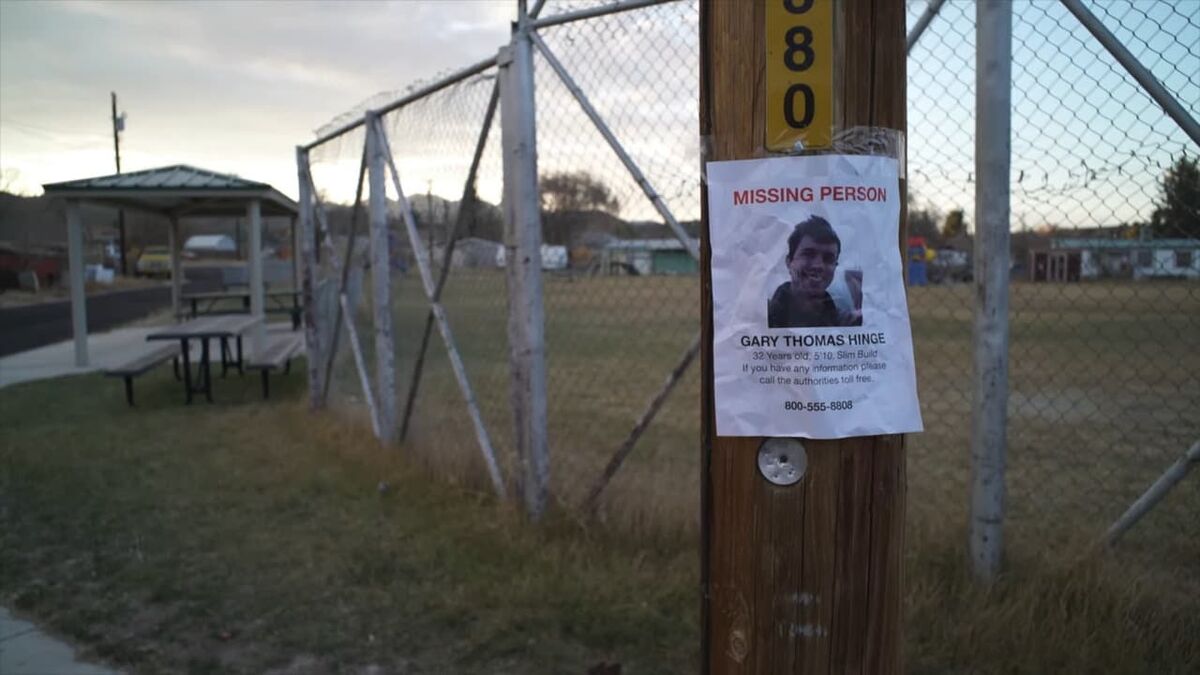
The film’s presented as a documentary about the mysterious disappearance of a young man named Gary Hinge. Gary lived in small-town Nevada, loved trains, hiking, and outdoor survival. And it was these last two that routinely took him way out into the middle of nowhere as part of his job, which is to map and survey remote areas for hikers to use as reference. To chart the uncharted so less-prepared others wouldn’t get lost. And it was on one of these hikes, that he just…vanished. He wasn’t a novice outdoorsman, he knew what he was doing. 

After three years of Gary being gone, his remaining friends and family have finally gotten some idea of what might have happened to him, and as the disclaimer that opens the film suggests, it’s not going to be pretty.

And that “warning, what you’re about to see is disturbing” is one of a few missteps here, but it’s not a fatal one. One of the things that betrays a lot of found-footage or mockumentary films is a tendency toward slickness - they’re supposed to be stories of real people, but all too often it’s clearly performance and scripted dialogue. They’re supposed to be capturing (at least in part) amateur footage of events, but all too often that gets cheated with cameras put in convenient places to capture shots a single consumer-grade camera couldn’t, or the point of view just gets forgotten entirely. Making films that are supposed to be something other than traditional films can be a safe bet from a budget standpoint, because you can cheat a lot with low-grade footage and you don’t have to worry about lighting setups or expensive camera equipment. But narratively, that kind of film is a lot harder than it looks, because we forgive all kinds of contrivances in regular films, but as soon as something is supposed to be “real,” those contrivances stick out like a sore thumb. Whether it’s a mockumentary or a more purely found-footage premise, you need to figure out the appropriate point of view and commit solidly to it, because otherwise believability goes right out the window.

And the first thing this film gets right is commitment to the point of view. Much like films like Howard’s Mill or Savageland, it looks like a true-crime documentary made by a small crew, aimed at the direct-to-streaming market. And it feels pretty damn convincing on that front. It’s clearly working from a modest budget but it rarely looks egregiously cheap, with production values consummate with a mid-level documentary. The music ranges from tastefully sentimental and forgettable to foreboding, with music stings to highlight the scary stuff. It’s a little on-the-nose in that regard, but that’s true to the form - the kinds of documentaries it’s aping aren’t subtle in the least. And the performances largely don’t feel like acting - they err on the side of understated, everyone seems like everyday folks, and they’re not always especially polished or articulate, but again, since the premise is that this is a documentary about something strange that happened in (very) small-town Nevada, it makes sense that even the professional journalist isn’t the most well-spoken person you’ve ever met. The dialogue reflects these characterizations, never really feeling glib or overly clever. The majority of the movie is a mix of talking-head interviews, archival video, and voiceover laid on top of footage of the Nevada desert, the rural blink-and-you-miss-it town where it takes place, and close-up footage of model trains, an attempt to capture the essence of who Gary was. So in that sense, the pretext is very believable and it’s easy to forget that it’s a work of fiction for most of its run time. 

The characters are largely believable as people - you’ve got Gary’s sister Beverly, racked with guilt over her brother’s disappearance, and Gary’s bewildered roommate Simon, who had no idea what sort of things Gary was up to, and who Beverly suspects had something to do with the disappearance. Peripheral to them are Gal, a local journalist who sees an opportunity for an exclusive not being covered by the big-city outlets, and Bill, a private investigator hired and extremely frustrated by Beverly, who keeps unwittingly interfering with the investigation. And at the center of it, Gary - a somewhat shy, awkward young man seen in archival footage, someone whose biggest passions are outdoor survival, exploration, and railroads. Someone who has a YouTube channel about outdoor survival and exploration, even though he’s not the most charismatic or natural performer ever. They’re all human beings, explored to varying degrees of depth, but none of them feel especially two-dimensional. It’s easy to buy into them as characters, as the kind of people whose lives get turned upside down by exactly this sort of situation.

So it looks right, and the people feel right, and that’s nothing to sneeze at, because these are the kind of details that other films of this type routinely fuck up. But there are problems with how the story plays out. Probably the biggest problems here are pacing and some of the choices made around advancing the narrative. Any crime documentary worth its salt knows how to tell a story. Usually you present the basic facts of the case, and then spend the length of the film drip-feeding hints at greater revelations, eventually dropping bombshells of one sort or another - someone’s hidden past or things they’ve been keeping secret, twists, facts that exclude the obvious culprit but make someone else look suspicious, things like that. And some of that happens here, but it happens fitfully - Gary was keeping secrets (as most people do), but they aren’t really explored - one is sort of brought up but then dropped almost immediately (it almost feels like they couldn’t afford another actor to flesh it out), another isn’t especially earth-shattering (though it is important for moving the story forward) and the way it’s presented it makes Beverly and Simon - the two people closest to Gary - look either like they didn’t actually know him that well at best, or kind of stupid and unobservant at worst. Tension between Gary and his sister over something that happened as children comes up, but doesn’t really go anywhere. Tension between Simon and Beverly gets brought up, but doesn’t really go anywhere. Bill says that Beverly “screwed everything up” (and indeed she did, to the point of evidence tampering) but it too is sort of glossed over, with little sense of how her mistake sets back the investigation. All of the pieces are there, but they’re sort of discarded as quickly as they’re introduced, as if the filmmakers knew they needed to be there, but not really why.

The pacing has problems on a broader structural level as well. A little more than two-thirds of the movie consists of interview footage and voiceovers, and though this is the stock in trade of this kind of documentary, it starts to feel a little inert by about the halfway point. The table-setting phase of the documentary, where we learn what happened and who all the players are, feels like it stretches out a little too long, the surprise revelations don’t mean much in the overall scheme of things, and each of the characters sort of exists in a vacuum relative to the others. Moreover, this film has a tendency to tell us how disturbing or unsettling or shocking something is without actually showing it to us for most of its running time. There’s a lot of variations on people telling us how bad something is instead of showing us the bad thing. It’s like we’re getting a lot of the important information second-hand, as if maybe the filmmakers didn’t have the budget to show something, so instead they had the characters describe it. And this, combined with two initial acts that have very little movement or action to them, starts to feel frustrating, as if we’re just going to get tease after tease with no payoff. 

But there is a payoff, and it does make good well enough on the first two acts. Gary’s last-known footage is recovered (and there’s even an explanation for how it was discovered, someplace where even some otherwise really good found-footage films drop the ball), and the majority of the third act is a tense sequence shot in infrared in the middle of the Nevada desert chronicling his last moments alive. It goes on maybe a touch too long, but it’s another place where the film’s limitations work for it. The footage is very much the footage of a single hand-held consumer-grade video camera, it’s not always pointed in exactly the right place, it spends a chunk of time pointed at the ground, and the stop-start nature of the filming heightens the tension nicely - every time the camera looks away, you dread what’s going to be there when it comes back, and infrared covers up any limitations to the practical effects for the most part. It lingers maybe a little too long toward the end, but I’m pretty sure it’s to a degree that only bothers me and won’t bother anyone else. So it does come good in the end, and that buys it a fair amount of goodwill.

On the other other hand, though, there’s an epilogue that undercuts some of the tension with an attempt to explain what we saw and a cautionary note about content creators not leaving well enough alone (though that’s certainly true to life too), and what seems like a hook for a sequel. It would have worked better with a much sparer ending and it would have worked better if the story didn’t spin its wheels for so long, but it plays like a documentary about actual people and an actual tragedy, and that’s not always the easiest thing to pull off. A quick look at the director’s entry on IMDB suggests his usual fare is the kind of low-budget horror films that miss the mark (at least according to people who post user reviews on IMDB, and we’re not exactly talking Cahiers du Cinema here), and apparently this film is the result of having to work around social distancing in the middle of the COVID pandemic, which is another set of limitations on top of budget. But if you’re trying to make a movie that isn’t in the traditional third-person mold, limitations aren’t just acceptable, they’re downright essential. Trying to cheat your way around those limitations really misses the point, and to the extent this film embraces them, it works a lot better than I expected it would.

Wednesday, July 20, 2022

Zhou: Family Obligations

Parent-child relationships show up a lot in horror movies. I mean, they also show up in dramas and comedies and martial arts films about the important of kindness and connection (seriously, go see Everything Everywhere All At Once if you haven’t yet, it’s great), but if you’re trying to evoke anxiety or dread or fear, putting a parent’s child in danger is a pretty effective way to do that. Every now and then you’ll get a film like The Omen or The Brood or Hereditary where the parent-child relationship is the horror, but even then it’s poking at the same nerve, just with a differently-shaped needle. 

One of the ways this plays out is by examining the lengths to which a parent will go to protect their child, and Zhou (Incantation) is a reasonably solid addition to that particular piece of the puzzle. It’s a little jumbled to start with, but it finds its way home in the end.

We begin with a collection of what appear to be home movies shot on phone cameras, and a voiceover asking us whether or not we believe in blessings - in the idea that our intentions can actually change outcomes, whether it’s wishing someone a happy birthday or safe travels, things like that. The voice argues that intentions do change outcomes, that our wishes have an effect. The voice belongs to Ronan Li, and she’s making a video because her daughter Dodo is very sick, and she’s trying to reach as many people as possible, to ask for our blessings, our good wishes. Her daughter is being harmed by the result of a mistake Ronan made six years ago, a mistake that resulted in a curse. If we watch the video, our good wishes can help Dodo get better, but there’s a catch: Watching the video might be dangerous to us, so we need to protect ourselves by fixing a holy symbol in our memory and reciting a protective chant.

The curse has a very long reach.

What follows is something that isn’t found-footage, exactly. It’s more like a mockumentary where the framing device is that we’re watching a video made by Ronan as…a warning? A plea for help? Both?...and the story is largely (though not exclusively) presented as footage collected from different sources - camcorders, phones, laptops, surveillance cameras, etc. In that sense it’s reminiscent of films like Noroi or Occult, presented as curated footage that documents something supernatural. It’s a little distracting when it breaks the conceit to show something from a conventional third-person perspective, but in general the storytelling is strong enough that it doesn’t become too disruptive, and it becomes a critical piece of the story by the end. When the film proper opens, Ronan has undergone inpatient treatment at a mental hospital after suffering severe trauma following a trip that she took with her boyfriend Dom and Dom’s cousin Yuan. They ran a paranormal investigation show called Ghost Busters (no relation to the New York-based Ghostbusters, presumably) and they were investigating a legend from the village where Dom grew up about a tunnel that must never be entered. We don’t find out right away exactly what happened, but whatever it was, Ronan took years to get over it, but she’s doing a lot better now, has a job and a home, and we join her as she’s regaining custody of Dodo, who has spent the last few years in foster care. 

So Ronan and Dodo get settled in, and right away things get weird. The film starts off strong with the curse’s evidence presented in striking fashion, going briskly from tragic coincidence to something more inexplicable over the course of the first two acts, but once the table is set, the decision to tell the story in what is largely a non-linear fashion dilutes the potential impact somewhat. There are roughly three timelines here - there’s the present, as Ronan is making the video, there’s the recent past, as she’s regained custody of Dodo and the proximal events that led up to the present, and there’s what happened six years before to incite all of this in the trip to the village. Part of the problem is that the time-jumps sometimes dilute the tension, another is that it’s not always immediately clear which timeline we’re watching right away. The end result is that the first two acts can be kind of confusing at times, which threatens to take us out of the movie. 

Which is unfortunate, because the moments in the first two acts when it does work, work very well. The film gets a lot out of very small things - unexplained noises, objects falling over, things suddenly changing position, Dodo talking to people who aren’t there, stuff like that. None of it is especially novel, but it’s all executed well in the moment, and the idea that this is curated footage, not raw footage, makes the staging easier to believe. The segments at home are shot through the limited field of view and limited light of a camcorder, so they benefit from the inherent spookiness of a house in the middle of the night, the single light source barely holding its own against the shadows and what horrible revelations might lurk there. It's pretty strongly diegetic - the film doesn’t really use music apart from some ambient stings and chanting, but that’s about it. Moreover, unlike a lot of found-footage or quasi-found-footage films, it pays attention to the limits of its sources and knows when and how to use silent action effectively - there are segments where no sound is available but we get everything we need from the footage, and it’s more effective for it. The filmmakers also avoid the usual viewfinder-vision cliché and accomplish some very striking and impressive effects sequences without ever breaking the conceit. The cinematography is suitably all over the place, depending on the source, but the film generally gets a lot of mileage out of dark, grungy spaces fitfully lit from a very restricted field of view. And the segments from six years before work well too - the village they visit feels strange right from the get-go, and little bits of business in the background, barely glimpsed, do nothing to alleviate that. Whatever they stumbled into feels wrong, and their insistence on pushing further builds a lot of dread because it’s clear whatever is going to happen, it isn’t going to be good. The film keeps coming back to whatever happened that night throughout the film, getting closer and closer to the awful truth, saving the worst right before the very end. I think if there’d been a more consistent use of title cards or another way to signify which part of the story we were in at any given moment, it wouldn’t have been quite so confusing.

But this is much less of a problem in the third act, when we’ve got a pretty good idea (though not good enough, as the ending reveals) of what’s going on and what Ronan is faced with, and it feels much more cohesive. At this point, as things get worse and worse and it’s clear that they’re not going to get better, the supernatural elements are supplemented by Ronan’s harrowing experience as a mother watching her child get sicker and sicker and being helpless to do anything about it. She’s trying to do what’s best for her daughter, but the right thing is sometimes the hardest thing, and you agonize right along with her. I’m reminded in some ways of The Exorcist, and Chris’ fruitless attempts to determine what’s wrong with Regan, while Regan clearly suffers. The ordering of things makes much more sense here, so even though there’s still bouncing back and forth in time, it’s easier to follow and so the dread that’s been there intermittently (though strongly for all of that) throughout really starts to build and sustain itself as the final pieces of the story fall into place.

It’s a movie about what a mother will do to ensure that her child is safe, healthy, and happy, the sacrifices that a mother will make to stand between her child and the predations of an implacable curse, and in this I see nods to Ringu and Dark Water in ways that riff on them without being blatant imitations, there’s even sort of a William Castle vibe to it in some ways that would absolutely spoil the film but give it  a nice punch in an ending that might be a trifle overlong, but comes good on what it’s promised the whole time and leaves you with something indelible, as simultaneously inexplicable and awful as the end of The Blair Witch Project. Between the people of the village, and Ronan, the film says that there are some things you do because you’re family, things that only your family can be responsible for, things that make you family whether you want to be or not, and things that family requires of you, and in this film they all exact a terrible cost.

Wednesday, July 13, 2022

Messiah Of Evil: So Crazy It Just Might Work

Something I’m beginning to notice is that once you start getting into older horror films (like, say, from the late 1960s onward) that aren’t the touchstone classics of their time, shit starts getting really weird. This isn’t just true for horror films - I can remember seeing a revival of a 1965 mystery called Who Killed Teddy Bear? that was easily one of the strangest, campiest things I’d ever witnessed on the big screen - but I’m starting to really notice it in horror films. Go back to the 1950s and mostly it’s stuff that has become quaint, go forward into the mid 1980s and, with some exceptions, things get formulaic for awhile. But it sort of feels to me like there’s a sweet spot from the mid 1960s to the early 1980s where the rules hadn’t really codified yet, and all kinds of oddities got made.  

And Messiah Of Evil is absolutely an example of exactly that. It’s a strange little fever dream of a film that, despite obvious shortcomings, manages to be surprisingly compelling.

It doesn’t waste any time, opening without any context at all on a man running through what appears to be suburban backyards, terribly bothered by something. He acts almost like he’s overheated, pausing to let a sprinkler douse him. He’s lying down on someone’s lawn, and a young girl comes out of the house, looks at him curiously…and slashes his throat with a straight razor out of nowhere. Smash cut to the title card. Does this man have anything to do with what follows? Kind of? Does the girl ever appear again? Nope. Does it matter? Nope. It’s played with such wild-eyed earnestness that you can tell all bets are going to be off. This cuts to the blurry, washed-out, backlit figure of a woman wandering down a hallway and a shrill, panicky monologue about how "they" are coming and how no one will hear you scream. So that's...no, that's still pretty fucking weird. 

From that, we cut to a young woman named Arletty. She’s driving into the Southern California town of Point Dume, looking for her father, an artist named Joseph Lang. There’s a voiceover from her as she drives, about how she and her father grew apart over time, until their only communication was the occasional exchange of letters, and how she hasn’t heard from him for months. She’s concerned, and wants to know what’s wrong. When she arrives in Point Dume, she finds her father’s beachfront combination home and studio abandoned. He left his diary behind, however, and in it he writes of being plagued by nightmares, of the town and all its residents being gripped by a horrible darkness.

In the diary, he begs Arletty not to come looking for him.

This is a film made in the United States by American filmmakers, and it’s shot on location in Southern California, but watching it, nobody would blame you if you mistook it for a lost Lucio Fulci film. There’s a lot of the same gonzo strangeness here that The Beyond had, the same lack of subtlety and willingness to just put something absolutely bizarre up on the screen in nearly every scene, whether it makes strict sense for the story or not. There’s nothing really naturalistic about this film at all, but an obviously shoestring budget also gives it a certain evocative rawness that you don’t really see much anymore outside of attempts at homage. It’s weird to compare something favorably to Manos: The Hands Of Fate, but it’s got that film’s same visual sense that you’re watching something between a community theater production and home movie from a parallel nightmare dimension. The acting’s better, but the dialogue is just as affected and melodramatic to the point of surrealism.

There isn’t a single conversation or interaction in this film that feels normal or natural (there’s a sequence in an art gallery - run by a blind woman - that’s especially bizarre for no apparent reason), whether it’s how people talk, how they hold themselves, the way they look at each other, everything’s just flat out weird. There’s no solid ground for the viewer, so there’s a low-level discomfort even in the moments where nothing’s actually happening. So it’s got Italian horror’s tendency to go pedal-to-the-metal strange, and  it’s also got Italian horror’s use of vivid color down pat - there’s a sequence in a movie theater that’s especially striking in this regard, and a moment toward the end that uses the paint in Joseph’s studio to create something that feels really unnerving without relying on gore. It’s not afraid of using light and color and garishly cheap-looking blood, it’s not afraid to hold a shot a little longer than you’d expect or to cut away at an odd moment, and like those classic Italian horror films, it’s all played so straight that it blows right past campiness into something almost operatic. I’m usually partial to more naturalistic films, but this one’s so relentlessly weird that it works. It just absolutely full-tilt commits to the strangeness, which is what you need for a film like this.

All of this is contrasted with settings that are - with one important exception - mundanely suburban, which just further contributes to the whole thing feeling like a nightmare, where people don’t talk like people, where the surroundings are familiar but somehow off, where everyone carries themselves as if they are harbingers of some underlying dread, not obviously stated but palpable nonetheless. Joseph’s combination house and studio is located in what might be a former church, and mostly consists of a single large, open space dominated by huge canvases of somber crowds of people and commercial interiors. At times it feels much larger than it actually is because it’s hard to tell where the actual space ends and the spaces depicted on some of the canvases begin, and the result is often disorienting on top of whatever else is happening in the scene, not to mention all of the silent, impassive faces staring back at you. Work areas and living areas are scattered throughout as well, so the whole environment feels itself like something from a dream, in the strange logic of a place that is both your bedroom but also a studio but also somehow dropped smack dab in the middle of a public area.

And then in contrast to this, you have everywhere else in town. Point Dume is a small town on the coast in Southern California, near Malibu, and it’s as everyday as that would suggest - there are grocery stores, movie theaters, motels, the whole lot, and by itself it’s not especially spooky, but it’s also largely deserted. It’s likely that the filmmakers got permission to shoot where they did in the middle of the night, which would explain the strange empty feeling, but it’s really effective. You’ve got this small suburban town in sunny California, right on the beach, and though nothing seems shuttered or abandoned, there’s nobody around. The lights are on, but nobody’s home, and this adds to the feeling of being stuck in a strange dream. At least, until there are people there, and then terrible things happen. That they’re happening in spaces like movie theaters and grocery stores just adds to the strangeness of it all.

The plot itself is pretty bare-bones - woman comes to a small town looking for her father, discovers the town has some strange, terrible secret, and the residents start bumping people off in ways that are presumably gruesome, given that most of the violence occurs off-camera or through clever editing. But somehow that’s worse, because either we don’t see what happens and people just vanish, or we see the aftermath, awful and sudden  It’s an interesting counterpoint to Dead & Buried, a film that would come along about ten years later, assaying similar Lovecraftian subject matter (town with a dark, occult secret) in a similar location (a small coastal town), but where Dead & Buried was more gothic in its approach - a fogbound fishing village in New England - this is sunny everyday California, and though Dead & Buried had its strange (and to its credit, very strange) moments, it was a much more grounded affair than this. It felt sinister, where this film feels almost hallucinatory. The result is a film that doesn’t always (or even usually) cohere, but is very rarely dull.

IMDB entry
Available on Amazon 

Wednesday, July 6, 2022

Rabid:The Social Disease, Redux

I’ve written here before about the films of David Cronenberg, and how they’re sort of hard to talk about while separating the film from the filmmaker. I try to keep my focus on the film itself as a finished product, since I think it’s easy for horror fandom - like any fandom - to pay more attention to the personalities behind a film than to the film itself. But as I’ve said before, it’s really difficult to do this with David Cronenberg’s films because there’s such a clear thematic through-line to his early work, and it’s in service of a vision that isn’t really like anything else in horror film. You sort of have to talk about his horror films not as horror films, but as David Cronenberg films.

I’ve looked at some of his early work here already - Shivers, The Brood, and Videodrome - and now, having seen Rabid, I think it’s probably best described in context as sort of a transitional film. It’s not one of his stronger films, in that it suffers from some of the same narrative shortcomings as Shivers (which preceded it) but doesn’t quite have that film’s audacity.

We open on a young couple - Rose and Hart - getting ready to go for a motorcycle ride in the Canadian countryside. All seems to be well, but they come around a bend and suddenly there’s a bickering family in a van stalled out across the middle of the road. They go over the hood of the van, Hart is thrown clear and Rose is trapped under the wreckage of the motorcycle.

Elsewhere - not too far down the road - is a plastic surgery clinic run by Drs. Dan and Roxanne Keloid. They’re meeting with Murray, their business partner, who’s trying to interest them  in the idea of franchising their clinic, turning plastic surgery into a mass consumer product. Dan is very resistant to the idea - he doesn’t relish the idea of being thought of as the “Colonel Sanders of plastic surgery,” but before anything can get settled, they’re informed of the accident by one of their recuperating patients, who saw the accident play out while they were outside getting some fresh air. Dan orders the clinic ambulance to provide aid, since the nearest full-service hospital is about three hours away in Montreal. Hart’s injuries are serious, but not life-threatening, so he’s triaged to get sent to the nearest hospital. But Rose is in a bad way - severely burned along one side of her body and losing a lot of blood. Dan makes the decision to perform surgery on Rose at his clinic, since she wouldn’t likely last long enough to make it to the city.

Once she’s stabilized, Dan and his assistant start in on an extensive series of skin grafts. He decides that they’re going to use an experimental technique in which the grafts are reverted back to what he calls “neutral field grafts” - that is, the cells of the graft become unspecified, so that they’ll take on the properties of whatever part of the body they’re grafted to. It’s an untested technique, but Dan’s confident that it will work. Flash-forward about a month, and Rose has been kept in a medically induced coma at the clinic to facilitate healing. She wakes suddenly, panicked and disoriented. When someone comes to check on her, she grabs him and…something…snakes out from underneath her arm and attaches itself to him.

Apparently, some of the cells decided to become something…new.

As it turns out, Rose now possesses an entirely new organ - a stinger-tipped sucker - that retracts from inside a puckered hole in her armpit. As it also turns out, Rose is now entirely dependent on human blood to survive. Animal blood doesn’t work, as she discovers the hard way. And as if that weren’t bad enough, this new organ of hers has some nasty side effects, including memory loss in the person affected, an inhibition of their clotting factor, and…oh yeah, the rapid onset of a rabies-like virus that leads to extreme aggression, then coma, then death. And it’s easily spread via saliva. So there’s really two stories here - there’s Rose and her new, increasingly untenable situation, which is a somewhat novel spin on vampirism, and the rapid spread of the rabies-like virus. Rose is sort of a Typhoid Mary, spreading the virus when she feeds, but not suffering its effects herself. Either one of these could have been enough to carry a movie on its own, but the problem is that combining them into a single narrative means neither gets explored or developed to the degree they could be. 

The epidemic piece is the more evocative of the two, ramping up in the background as the film goes on and making for some striking individual moments (especially toward the end, which is pretty much a punch in the gut), but I think epidemic stories really need to have an observable progression to really work - think about the scenes from a film like Contagion that illustrate the ease with which a disease can spread, showing how all it takes is one person in the wrong place to start an exponential growth in cases, and here that’s never really clearly charted. At a certain point in the movie, all of a sudden there are people in the middle of a major city showing symptoms without a clear indication of how it got there, given that everything started in a small clinic hours away. It’s emphasized that the virus incubates in a matter of hours and people suffering from it have a diminished capacity (and go comatose and die pretty quickly) so it’s tough to see how it just crops up someplace when we never really see how it travels there, or how it’s able to spread so quickly when the hosts don’t live for all that long. Rose spends most of the film confined to the clinic, so that’s where most of the cases crop up, but then enough time passes that the people from the clinic who get it should already be rabid and/or dead before they even make it to the city. It happens off-screen to enough of an extent that when it’s clear that it’s reached Montreal in a big way, it seems like it came out of nowhere.

Rose’s story is likewise underexplored, and suffers from inconsistent characterization. Rose wakes up from her coma unable to subsist on anything except human blood, and over the course of the film she bounces back and forth between someone who’s confused and afraid, a cool, calculating predator, and someone in denial about what she’s doing and what effect she’s having on the world around her. It’s not really a progression, it just alternates as is necessary for any particular scene, and apart from it feeling disjointed, it’s all very much just a collection of scenes - she’s over here, now she’s over there, and pretty much every scene she’s in boils down to her infecting someone, so it doesn’t take long to become sort of predictable. That Rose doesn’t really exhibit much in the way of horror or regret or disgust or confusion in those moments, slipping instead into predator mode, doesn’t really help - for a good chunk of the movie she’s less of a character than a plot device. 

Her story is pretty much a monster story, but unlike Cronenberg’s later film, the remake of The Fly, we don’t get much insight at all into her feelings about what she’s become apart from some denial at the end. The mechanism of her vampirism is the most novel thing here, and it’s of a piece with Cronenberg’s particular view of biology as articulated in his other films, but it’s never explored the way it even is in Shivers, and apart from the analogy to sex (penetration, a sense of satiation), it’ not nearly as audacious as how Shivers reduced sex to a mechanical impulse, devoid not just of intimacy but also of conscious will, how The Brood used the idea of birth as an actualization of unresolved rage and trauma, or Videodrome’s cold, clinical look at the intersections of flesh and technology. There’s some of that here with the experimental plastic surgery, but that’s an angle that goes largely unexplored - people willing to go under the knife over and over again to reshape their flesh to increasingly specific requirements seems like it’d be fertile ground, but it barely matters here.

It does have its moments, mostly around the steadily worsening epidemic in Montreal, which is evocative in some ways of Night of the Living Dead, and things like being required to carry around vaccination cards certainly hit different now than they would have even three years ago, but they’re isolated moments. The film itself suffers throughout from the same choppiness that Shivers had, fragmented into a collection of discrete scenes that don’t really flow together. The end result is that a routine starts to develop, where scenes about Rose alternate with scenes about the epidemic, and its most interesting ideas go unexplored enough that really all you end up with is a vampire movie with a somewhat novel spin on how the vampirism works. It was only his second feature-length film, and like Shivers, the pieces are all here - the malleability of biology, amoral appetites, technology and modern living having unintended consequences, threatening to separate us from our humanity - but out of all of Cronenberg’s work, they’re at their least realized here.

IMDB entry
Available on Tubi
Available on Amazon

Wednesday, June 29, 2022

Rent-A-Pal: Parasocial

A big part of being human is a need for community and belonging. Friendship, romantic relationships, family ties (however you define family), it’s all essential to our happiness and well-being. It’s not a life-or-death thing like food or air or water, but a life without connection is a really hard one. And I think it’s something we don’t really realize the importance of until it’s missing - the inchoate discomfort that attended two years of interacting with pretty much everybody via a screen attests to that, I think. And horror examines this really well sometimes - in films I’ve written about recently, like Saint Maud, Censor, My Heart Can’t Beat Unless You Tell It To and May, you have protagonists whose isolation from the people around them and their struggle to connect has a serious impact on their mental health, and as often as not their attempts to reach out have terrible consequences. It may not be the flashiest of our fears, but it’s a powerful one.

And Rent-A-Pal, despite a premise that could have easily gone in a very silly direction, ends up being a creepy, restrained story of the psychological costs of loneliness and lack of connection. It’s a thoughtful, sensitive film, ultimately marred by some puzzling narrative choices.

It’s Denver, Colorado during the 1980s, and we’re introduced to David while he’s watching a videotape of a series of women, sitting in front of a plain backdrop, describing themselves and what they’re looking for in a relationship. It’s part of a video dating service that he’s signed up for. See, David’s in kind of a tough spot in his life right now - he lives at home with his mother Lucille, who is suffering from advanced dementia and needs constant supervision. His father’s been dead for some years, so David is all she has left. They get by okay on her Social Security, but it doesn’t leave him a whole lot of time to socialize. If he leaves the house for more than an hour or so, he needs to take her to the local senior citizen’s center, and that costs money.

But David has needs like anyone else. He gets lonely. And, as is so often the case, folks who are lonely and having trouble making connections on their own turn to services to help match them with people. And it’s the 1980s, at a point when VCRs have become common, commercially available technology and video cameras aren’t far behind. So video is revolutionizing what might have once been called the “lonely hearts” industry. David watches the interviews, makes notes in a little form that came with the tape. He uses one of his valuable hours out of the house to go to the video dating service, hopeful that he’s matched with someone this time. It’s been about six weeks without a single bite. No such luck this time either, though the receptionist is as optimistic and encouraging as any sales person would be.

As he’s just about to leave, he notices a tape in a large bargain-bin of miscellaneous videotapes. It’s called “Rent-A-Pal,” and it’s basically advertised as a virtual friend. Think something like a more interactive version of a recording of a Yule log. It’s a recording of someone named Andy. He’s smiling, attentive, sitting in a chair facing you. You can tell him your embarrassing stories, confess your deepest hopes and fears, and Andy will never, ever judge you.

Andy will always be there for you.

And this is what David is reduced to at this point, and what the film explores is the steadily mounting cost of his loneliness and the way a prerecorded friend may not be the healthiest solution to his predicament. The film is set, importantly, in a period when the idea of virtual connection was in its infancy. It’s not the modern day, with pervasive social media and instant communication across multiple channels. It’s analog, not digital, and the film makes much of the thump and clunk of VCRs, the way gears and capstans whir, spooling out tape, the way CRT television signals become noise, then red, green, and blue abstraction, the ratcheting of old credit card impression devices. There are lonely people in the world, trying to make connections, but the technology is as clumsy and fumbling as the people who have recourse to it to relieve their sense of isolation. It’s less conversation and more sort of hurling your attempt at connection out into the void and waiting days or weeks to hear back. It’s a conversation played back on a screen, the same way every time. You could talk to the screen, but it doesn’t actually hear you. Technology in this film is something tactile, big and clunky and ungainly without being self-conscious about it, and it describes a world where the potential for connection through technology is not nonexistent, but certainly very primitive.

And it’s a very believable world. The film does a very good job (for the most part) of painting relatable, sympathetic characters who are doing the best they can with what they have. David is fundamentally decent, trying to do right by his mother while still able to acknowledge the costs to his own life. He knows what he’s missing out on, but he isn’t going to abandon his mother. Lucille, almost totally helpless, is his entire life. She has her good days and bad days, but as David observes, they’re starting to tip more toward the bad more often. He’s all she has left, so his only real connection is with someone completely dependent on him and who as often as not isn’t even really aware of who he is or where she is. He’s 40, he lives in his mother’s basement, and any opportunity to get away for more than an hour or so costs some of the money he has to keep strictly budgeted. His comforts are few - a bottle of whiskey, a box of candy bars, some grainy old 8mm stag films when he’s sure Lucille is asleep. He spends a lot of time in front of the television.

And it would have been easy to make Lucille a caricature, a harridan abusing her henpecked son, but she isn’t. It’s clear that she’s aware on some level that she’s losing her faculties and it makes her angry and sad. She insists on trying to feed herself and breaks down when she can’t. She just wants to go for a walk and can’t. She’s in a lot of pain, and she keeps mistaking David for her late husband. Sometimes he corrects her, sometimes he plays along. Sometimes she gets angry with him, sometimes there’s real affection. It’s a demanding job, David’s not a healthcare professional and he’s doing the best he can, whether that’s enough or not. There’s resignation there, resentment, but he keeps it under wraps. For her sake. Of course, this also makes it difficult for him to really have a life or pursue relationships, and from the outside looking in, a bland, soft, middle-aged man who still lives with his mother isn’t anyone’s idea of a catch. There’s an especially painful sequence at the video dating service where you see David in all his depth and decency, but his interview segment runs too long, and what it shortens down to reduces him to something pathetic. The cards are stacked against him and you get the sense that he knows it, and it’s starting to get to him.

So you have real, sympathetic people located in a drab, workday vision of 80s suburbia. It’s a restrained, low-key setting, and the idea of a videotaped “friend” who becomes increasingly sinister could have been really jarring. It could easily be played for camp or cheated into something else, like a Freddy Krueger who springs from the television set, but the film largely plays fair with the idea just as it does with the flesh and blood characters. Andy is blandly friendly (at least to start), and the film gets a lot of mileage out of using the same footage repeatedly (since it’s a tape, committed to a specific routine)  in changing contexts to turn what was at first a little awkward into something more menacing. Early on, there’s a nice push and pull between moments where David’s interactions with Andy fall into the rhythms of an actual conversation with another person, and moments where the artificiality is laid bare, where it becomes plainly evident that Andy’s responses are canned, scripted, and will always be the same no matter how many times you rewind the tape. It’s nicely illustrative of the limitations of virtual relationships, of parasocial contact, without being too didactic about it. And as the film goes on, something starts peering through the cracks in Andy’s amiable façade - little hints at troublesome things in his past, then emotional cruelty, then obsessive, emotionally abusive behavior. It’s never clear how much of this is actually the tape and how much of it is David’s disintegrating mental state, and the film doesn’t seem especially interested in committing to one interpretation over the other, but it also never tips too far into unbelievability, so it doesn’t especially matter. There are hints and feints at Andy creeping into David’s personality and waking life, and David’s perception of the world becoming increasingly skewed. It’s underplayed enough that it isn’t over-obvious, but also maybe a little too underplayed at points. There are a couple of moments that aren’t as shocking as I think they’re meant to be because they’re so blink-and-you-miss-it.

But the biggest problem far and away with the film is its pacing and narrative flow. This is basically the story of a desperately lonely man and how his desperate, last-ditch approximation of human contact ends up going terribly awry. That’s not a new story (nor does it need to be), but it’s typically one with a specific progression, and the sequence of events here gets muddled. The first half or so of the film works very well and takes its time to build up a sense of wrongness gradually, alongside a sensitive depiction of David’s life. It’s easy to root for him, to hope that maybe just this once the horror film won’t turn into a horror film. But then at about the halfway mark, there’s a sequence - an extended montage - that you’d expect to come in the third act of the film, when the protagonist’s attempts to reach out have all been rebuffed and the final downward spiral begins. But here, it happens and then…things start to look up for David, and continue to do so. The end result is that when the bottom does drop out, it doesn’t feel earned - David’s responses don’t feel authentic or natural because they aren’t coming as the culmination of one disappointment and rejection after another. That moment happens, but then things turn around, but then it ends as if things never turned around for him. As long as the focus is on obsolete technology, it feels like a film where one of the reels got shown out of order, or a DVD where two or more chapters got played in the wrong sequence, and so the second half of the film is a more confused affair than the first and doesn’t stick the landing nearly so well as a result. I think it ends well, and in a way that makes sense for the kind of film it is, but it doesn’t feel like the logical conclusion to what we’d just seen beforehand. It should be a tragedy, where for someone like David, any rejection is world-shattering and likely to send him over the brink, but instead it’s sort of baffling - as if everything good that had happened to him didn’t matter because he was committed to his downward spiral ahead of time, and it doesn’t feel like self-sabotage or self-destructive behavior, it doesn’t emerge organically.

But on yet another hand, it’s very well-shot and edited. The director got their start as a cinematographer and editor (this is their directorial debut) and it absolutely shows. This film gets the 1980s right without being too showy about it - the interiors of David’s home are slightly dim, lit by lamps and flickering television light like any modest home of the time would be, modest period appliances and furnishings and a basement living space that combines bedroom, living room, and hastily retrofitted bathroom with a drop ceiling and exposed pipes to create an environment exactly as sad as it needs to be. The video dating service is as brightly colored and plastic as you’d expect, all primary colors, bold geometric designs, and glossily enthusiastic customer service people. There’s a wonderful moment at a skating rink that’s shot as equal parts pastel reverie and suburban Edward Hopper, and in his lowest moments, David’s world is stark and fragmented, nighttime becoming dawn in an instant, all jump cuts and harsh, unflattering light, his moments with Andy crashing down into reality in the worst possible ways. The film is full of closeups on old technology, the first glimpses into technological isolation all clunky and mechanical and covered in artificial wood grain and video signals range from clear to glitchy and noisy, eventually breaking down into pure light and color, all meaning lost. In some ways, it reminds me of how One Hour Photo mixed image and reality, though it never really commits to the conceit to the extent that film did. But its visual sense is excellent, evocative lighting and shot angles, expressive editing - the story’s beautifully told, it’s just the way it orders things that lets it down.

The performances are all solid, pitched at a relatable, human level, the dialogue is largely naturalistic, and until the very end, even Andy is a restrained menace, his wide-eyed friendliness maybe just a little too wide-eyed and the little hints that all is not right coming subtly at first and then less so. Unfortunately, apart from the confusing sequence of events, some of this subtlety is lost in the very end, things become a little too artificial, and the end drags out maybe a little too long. Which is too bad, because there’s a lot here to like, but it’s one of those cases where the shortcomings stand out even more as a result. Much like David, there’s a lot of good here, but the way the video is cut, it doesn’t come through.

IMDB entry

Available on Hulu
Available on Amazon

Wednesday, June 22, 2022

The Neon Demon: Welcome To The Jungle

I’ve never really understood the fashion industry. I mean, I understand the need for clothing and I understand the concept of style, and I guess I can understand the idea of clothing as art, emphasizing form over function. I get it in the abstract, but the values and the priorities and the worldview that seem to attend it are utterly alien to me. If I were to be ungenerous, I’d say that it’s very superficial in its values and priorities and worldview, that it’s only concerned with appearance, and with some kind of idealization of form. Maybe there’s more to it than that, but the glimpses I’ve gotten certainly point to it being a world that is ultimately shallow and cruel. 

And this is what makes The Neon Demon such a tough film to wrestle with. On the one hand, it perfectly captures a world that is vain and empty and soulless, all surface and nothing else. And in that sense, it works very well. But the same things that make it such a vivid portrait of callous superficiality are also kind of its undoing. 

The film opens on a young woman, reclined on a chaise. She’s made up, stylishly dressed, wearing fancy jewelry. There’s something sleek and glossy about her, and there’s something sleek and glossy about the blood that runs from a slashed throat into pools on the floor. As she stares up at nothing, a camera clicks.

Cut to this same young woman at a dressing table, wiping off the fake blood. Her name is Jessie, and she’s just recently arrived in Los Angeles from small-town Georgia, looking to make it big as a model. Her prospects are limited, but she recognizes that she can make a living off her looks. Ruby, a makeup artist on the shoot, helps her clean herself off. Jessie wants to shop the photos from the shoot around to different agencies, but she’s acutely aware that she’s a novice at all of this. Ruby tells her not to worry, that “that deer-in-the-headlights look is exactly what they want.”

Jessie is all of sixteen years old.

On one level, it’s the story of the small-town girl who’s come to the big bad city to become a star, and that’s a story with its own stock characters and narrative. You’ve got the ingenue, the young man who believes in her and is the first one forgotten when she makes it big, the one woman looking out for the ingenue, the catty, jealous rivals and the predatory industry ready to chew her up and spit her out like so many before her. All are present and accounted for here. Well, I say on one level, but that’s kind of the only level there is here, because this is a relentlessly superficial, artificial film. Which isn’t necessarily a criticism – it’s a story about a world that is all surface, told in ways that are themselves all surface. Dialogue is sparse and typically delivered in almost robotic fashion, nobody in this film has an inner life, and everyone - the young man who believes in her included - has their own agenda. It’s the story of a girl - not even a young woman, a girl, not even done with high school - thrown into this environment and what’s going to happen to her, told through the hard sheen of the fashion industry. There are two worlds here - the glossy, stylish, designed-within-an-inch-of-its-life world of fashion, and the dingy, sordid world outside of that. There’s no in-between, no suburbs, no grocery stores or schools. Just shoots in glamorous locations, parties, and the shitty, run-down motel in Pasadena where Jessie is staying, fresh off the bus. Again, this isn’t a slice of life, and it all points back to a vision of Los Angeles as a dangerous jungle, reinforced in ways literal to the point of surrealism, where everyone is either a predator or prey. There’s an especially telling conversation about the names of lipstick shades (like I said, it’s a superficial film) that ends with Ruby asking Jessie “are you food…or are you sex?” And that’s the text - Jessie is a commodity, something to be consumed or used, nothing more than her body, nothing more than her flesh.

And as a film about surface, it excels - the segments in the “real world” are shot as drab, full of chiaroscuro and lens flare and the sickly glow of fluorescent lights. The world of fashion is sleek, modern, minimalist, sometimes awash in pinks and purples and blues and reds and neon, sometimes a completely white void, sometimes an empty black space studded with dressing-table lights and photography flashes. Runway shows are reveries, parties are luridly monochrome and strobe-lit (there are points in this film which would not be good for the seizure-prone), photoshoots are merciless exposure under burning lights, cameras clicking and flashing with an insistence that’s intrusive. It’s full of striking visuals, soundtracked with a score of lush, bright synthesizer, which does offset the enervated feeling you get from the dialogue and performance somewhat, so the end result is a film that’s wonderful to look at and listen to, with not a whole lot going on underneath.

Which, again, is exactly right for the subject matter - it embodies that empty superficiality perfectly, but that same emptiness, combined with a nearly two-hour running time, also makes the film an almost numbing experience at times. And this works against the horror of the world it portrays. As I said, this is in its broad strokes very much the standard story of a small-town girl who tries to make it big at a terrible price, but it’s that story told at the pitch of a horror film. Under the immaculate surface there is envy and desperation and raw hunger - hunger for more beauty, more youth, hunger for a party that never ends, and it’s rendered literal in ways that are, as individual moments, absolutely arresting, but don’t ever really gather much dramatic momentum. It’s catty small talk, and then it’s atrocity, and then it’s catty small talk again. There’s not much in the way of traditional story structure, and where the first act sets up a sense of quiet menace, this naïve little girl all on her own surrounded by wolves, the second act, which largely seems to be about her rise and transformation from small-town girl into next big thing and the monstrosities that come with that, feels more aimless and unfocused, so the feeling of menace, while not lost entirely, does drop away when it should be intensifying. The result is that the third act, striking for a relative absence of dialogue and reliance on individual images that almost turns it into an extended series of tableaux, doesn’t land with he impact that it could. There are still moments to make you gasp, but like so much that came before, they sort of exist in suspension, in isolation from each other. And the absence of any emotional heft or investment takes a toll here, where things that should be shocking become just another image (however horrifying) in an extended series of images. 

There are moments here which even in mere depiction have a lot to say about the idolization of image, the costs it exerts, and the ways - often strange and ugly - people do whatever they can to get close to beauty, but the languid pace and superficiality with which they’re presented make it hard for them to really hit home.  If it’s a film about the emptiness and ultimate horror behind the idea that beauty isn’t everything, but rather the only thing, and how it consumes and warps the ones who chase it, it does such a good job of submerging us in that world that its numb callousness ends up rubbing off on us.

Wednesday, June 15, 2022

Terrore Nello Spazio: Time And Space

In my ongoing attempt to become more literate in Italian horror, I’m trying to familiarize myself with the classics at the very least. I’ve watched Dario Argento’s Suspiria and Deep Red (though now that I know what I saw was a version butchered for American release I may have to revisit the latter) and Lucio Fulci’s The Beyond. I feel like I’m starting to get a handle on the general style - colorful, visually striking, and a total lack of subtlety seem to be constants - but I am aware I still have a long way to go. I decided that my next step was to start checking out the work of Mario Bava. There were a few different movies I could have gone with, but I decided to use this as an opportunity to check out Terrore Nello Spazio (Planet Of The Vampires), a film that’s piqued my interest for a long time, ever since seeing a still from it in Michael Weldon’s highly influential (to me at least) book The Psychotronic Encyclopedia of Film.

What I got was something that’s certainly interesting as a curiosity and affirms certain expectations that I’ve developed about Italian horror, but unfortunately it hasn’t really stood the test of time in many ways. I think a lot of this is down to it being a film that is both science fiction and horror, and things that make a lot of science fiction films from the 50s and 60s quaint (if not unintentionally comic) to the modern eye are working against it here.

We open on the crews of two deep-space exploration ships - the Argos and the Galliot - as they approach the planet Aura. They’ve been brought there by a distress signal emanating from the planet. It’s shrouded in fog, which is going to make landing difficult, but before they can really plan a trajectory, some force grabs the ships and yanks them down into the atmosphere. We follow the crew of the Argos as this is happening, and most of the crew blacks out from the gravitational force of the descent. Upon landing, the crew immediately turn on either other, violently assaulting each other, apparently insensate to their surroundings.

And then the attacks end as quickly as they begin, and nobody remembers what just happened.

If how I’ve written it makes it sound kind of abrupt, well, that’s because it is. The whole thing begins with the mixture of idle banter, exposition, and technobabble common to science fiction of the period, and then all of a sudden the ships are getting pulled toward the planet and then equally as suddenly everyone is attacking each other. Not a lot of build-up, it just all happens out of the blue and ends just as quickly. What follows is largely the story of Mark (Mark Markary, which is certainly a name), captain of the Argos, and some of his crew. They bury their dead and set out to find out what happened to the Galliot and why any of this happened in the first place. The ship sustained damage during the descent, so until the repairs are finished, they aren’t going anywhere.

One thing this film definitely has going for it is visual flair. It doesn’t look dramatically different from science fiction of the time, but it’s a very well-executed example of the style. The spacesuits the crew wear look more like fetish wear than anything else, and Aura is shot with the hallmark Italian tendency toward vivid, riotous color, all skies of purple, green, blue and red, shrouded in fog and covered in strange rock formations that look less like papier-mache than you might expect. The set construction for the ships themselves is remarkably good - there’s the requisite consoles and banks of computer-looking things made up mostly of blinking lights, but everything has a weight and substance to it, a solidity often missing from similar sets elsewhere in the genre. You’d never mistake it for a more contemporary film, but nor does it look as cheesy and low-budget as science fiction films of the period usually do. The effects work is also surprisingly good - optical effects aren’t treatments of the film stock (or if they are, they’re really, really well-executed ones), and much of the world is built using miniatures and matte paintings whose artificiality is well-hidden. It looks as much like actual ships on an actual alien planet as you could reasonably get in the mid-1960s.

Unfortunately, the same can’t really be said of the narrative. The dialogue suffers both from the stilted quality you get with any film dubbed from one language into another, and on top of that you have generous dollops of the meaningless technobabble you get with most science fiction films from this period. For example, the distress signal’s location is at “15 degrees felcar coaxial alfa vacuum,” they will begin landing procedures in “60 fractions of megon,” and Mark orders them to “synchronize the meteor rejector on the electromagnetic control device.” This goes a long way toward undercutting any mood or atmosphere that might develop, since even once you get past the dated visuals, as well-executed as they are, there’s still what’s actually being said, which is quaintly corny and in the modern day more likely to inspire chuckles than anything else. More than once while watching this, I thought that the cast of Mystery Science Theater 3000 could have a field day with this, the way they did with This Island Earth, for a lot of the same reasons. Part of any good horror film is emotional investment in and engagement with the film, and trying to keep a straight face through dialogue that’s stilted not just by the weird rhythms that come from Italian-to-English dubbing, but hilariously surreal attempts at scientific or technological language was just not possible. The needle went from “earnest” to “ironic” so fast it cracked the gauge. Characterization is pretty flat, pretty much everyone has three settings: Grimly resolute, frightened, and bemused. It doesn’t need to be a character piece, but nobody has much personality of any sort. It’s generally not a good sign when you have to review a plot summary to remember who was where at any given point.

Another big problem with the narrative is pacing – the film has a tendency to meander, and just when it feels like things are about to ramp up, they…don’t. As soon as the crew lands on the planet, they immediately go berserk and attack each other - no build-up, no subtlety, no nothing. It just happens and then they sit around for a bit wondering why they did. The first act is largely table-setting, which isn’t a problem in and of itself, and it does wrap up with a sequence that suggests that something more sinister is coming, but then it pretty much goes back to a lot of wandering and speculating for most of the second act. There’s one sequence in particular, where Mark and his crewmate Sanya wander off and discover something (a setpiece that would be echoed to much greater effect in Alien about twelve years later) that just brings what little action and momentum the film had up that point to a screeching halt. Just completely dead in its tracks. The revelation it’s intended to provide could have been managed in about half the time, and it doesn’t really slot into the overall story. It just sort of happens and then doesn’t really matter much after that. The film never really gathers steam, instead getting things that occur in isolation without much of a sense of story beyond “crew lands on alien planet, weird things happen, they wonder why they’re happening, and then other weird things happen.” There are some individual scenes which are striking and there are a couple of good startling moments, but they all exist in isolation from each other and don’t really cohere or create a sense that events are headed to any kind of conclusion. Things do pick up a bit late in the film, but it’s sort of too little, too late, consisting mostly of clumsy action sequences.

The whole thing ends on a note that’s both predictable and more than a little confusing given what we’ve seen and heard up to that point, as if someone thought of the ending without having read the rest of the script first. To its credit, I can see DNA here for films like Alien and Event Horison, but 57 years later it all just seems kind of enervated and silly. Horror and science fiction are a tough combination at the best of times, and science fiction dates faster than almost any other kind of genre film. Putting the three together is always going to be a tough sell, and I suspect I’m going to have to look elsewhere to see what Bava’s strengths really are.

IMDB entry
Available on Amazon